| |
|
|
The Department of Computer Science
of Colorado State University, in cooperation with ISTeC
(Information Science and Technology Center), offers the CS
Colloquium series as a service to all who are interested
in computer science. When in-person meetings are possible, most seminars are scheduled for
Monday 11:00AM -- 11:50AM in CSB 130 or Morgan Library
Event Hall. For help finding the locations of our seminar
meetings, consult the on-line CSU campus map. |
Upcoming Events
CS Colloquium Schedule, Fall 2025
|
|
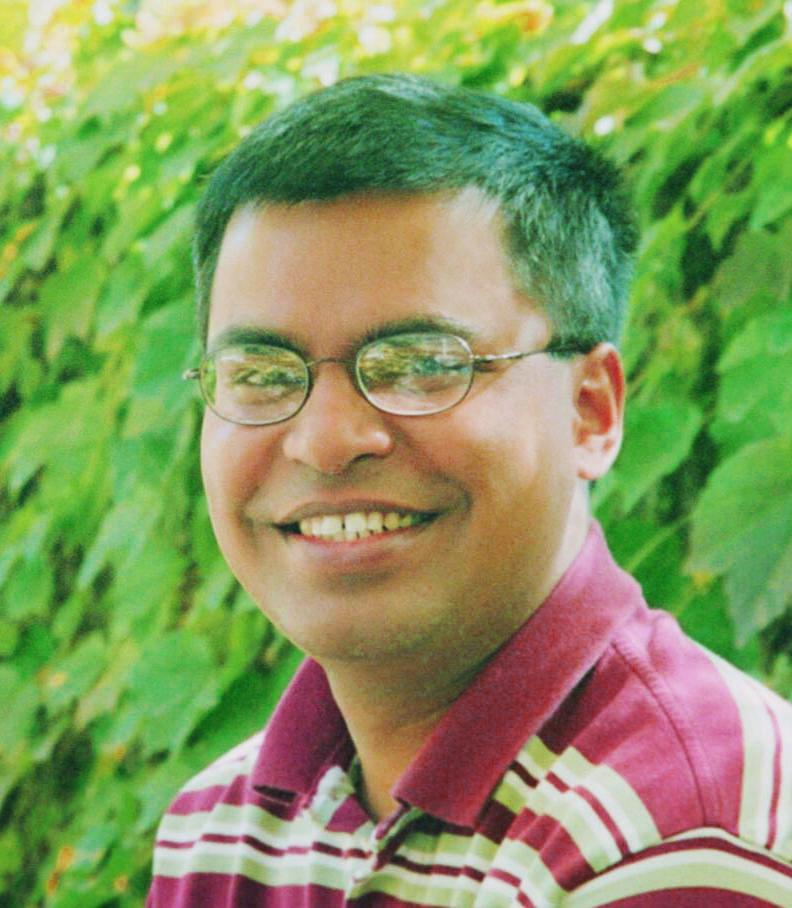
Computer Science Department Colloquium Introduction to the Graduate Program Speaker: Sudipto Ghosh, Professor and Graduate Director, Computer Science Department When: 11:00AM ~ 11:50AM, Monday August 25, 2025  Abstract: Dr. Ghosh introduces the Computer Science graduate program at CSU. Bio: Dr. Sudipto Ghosh is a Professor of Computer Science at Colorado State University with an affiliate appointment in Systems Engineering. He is also the Graduate Program Director of the Computer Science Department. He received the Ph.D. degree in Computer Science from Purdue University in 2000. His research interests are in software engineering (design and testing) and computer science education. He is on the editorial boards of Software and Systems Modeling, Software Quality Journal, and Information and Software Technology. Previously he was on the editorial boards of the IEEE Transactions on Reliability and Journal of Software Testing and Reliability. He was a general co-chair of MODELS 2009 (Denver) and Modularity 2015 (Fort Collins). He was a program co-chair of ICST 2010 (Paris), DSA 2017 (Beijing), ISSRE 2018 (Memphis), ISEC 2024 (Bangalore), and QRS 2024 (Cambridge). He has served on program committees of multiple conferences. He is a member of the ACM and a Senior Member of the IEEE. |
|
|
|
Computer Science Department Colloquium Labor Day Speaker: Holiday When: 11:00AM ~ 11:50AM, Monday September 1, 2025 Abstract: |
|
|

|
Computer Science Department Colloquium Simulation, Training, and Education: Mixed Reality Interfaces for Medical Applications Speaker: Dr. Florian Heinrich, Senior Researcher ⁄ Postdoc, Virtual & Augmented Reality Group and Research Campus STIMULATE, University of Magdeburg, Germany When: 11:00AM ~ 11:50AM, Monday September 8, 2025 Abstract: Medical applications remain a key focus in mixed reality (MR) research, as the field demands innovative solutions for preoperative planning, intraoperative guidance, and education. This talk introduces the core concepts of MR technologies and highlights selected contributions in the medical application area. This begins with the integration of MR technology into anatomy education, followed by an augmented reality tool that has demonstrated effectiveness in laparoscopic surgery training. Next, MR-based guidance systems for minimally invasive interventions will be presented. Subsequently, virtual reality simulations that replicate MR visualizations and medical workflows—enabling controlled, cost-effective evaluations—will be discussed. The talk concludes with applications of MR in the field of Human-Robot Interaction. Bio: Dr. Florian Heinrich is a postdoctoral researcher in the Virtual and Augmented Reality Group at Otto von Guericke University Magdeburg, Germany. He completed his PhD on medical AR visualizations for needle-based interventions such as tumor biopsies, with a focus on projector-based AR solutions. He previously worked as a senior researcher at the Chair of Human-Computer Interaction at the University of Würzburg, Germany. His research centers on visualization and interaction concepts for AR and VR technologies. He currently leads the junior research group on Human-Machine Interaction at the medical engineering Research Campus STIMULATE, where he explores a range of AR applications in medicine, including the simulation of clinical workflows and projector-based visualizations in VR. |
|
|
|
Computer Science Department Colloquium Lightning Talks -- Round 1 Speaker: CS Faculty When: 11:00AM ~ 11:50AM, Monday September 15, 2025 Abstract: Faculty present brief talks on their research activities. Bio: Sudipto Ghosh, Bianca Trinkenreich, Fabio De Abreu Santos, Juspreet Singh Sandhu, Indrajit Ray, Indrakshi Ray, Mckenna McCall, Viktoria Koscinski, Yashwant Malaiya (moved to round 2) |
|
|
|
Computer Science Department Colloquium Lightning Talks -- Round 2 Speaker: CS Faculty When: 11:00AM ~ 11:50AM, Monday September 22, 2025 Abstract: Faculty present brief talks on their research activities. Bio: Asa Ben Hur, Bruce Draper, Darrell Whitley, Nate Blanchard, Ewan Davies, Marcia Moraes, Mohammed Arefin, Sudeep Pasricha, Yashwant Malaiya |
|
|
|
Computer Science Department Colloquium Lightning Talks -- Round 3 Speaker: CS Faculty When: 11:00AM ~ 11:50AM, Monday September 29, 2025 Abstract: Faculty present brief talks on their research activities. Bio: Nikhil Krishnaswamy, Carlos Ortiz Marrero, Louis-Noel Pouchet, Sanjay Rajopadhye, Sangmi Pallickara, Shrideep Pallickara, Vinayak Prabhu, Ravi Mangal, Sarath Sreedharan |
|
|

|
Computer Science Department Colloquium Using CS Linux Infrastructure as a Graduate Student Speaker: Paul Hansen and Abhimanyu Chawla, Systems and Network Administration, Department of Computer Science When: 11:00AM ~ 11:50AM, Monday October 6, 2025 Abstract: The Systems and Network Administration (SNA) team will host an introductory knowledge session on using the Linux workstations and computing resources in the Computer Science department. This session is designed to help students become familiar with the department’s computing environment and gain the skills needed to work effectively. Participants will learn how to: · Access their login credentials and connect to departmental machines. · Locate and use information about available Linux resources, including workstations, clusters, and storage systems. · Find, install, and utilize software required for coursework and research. · Troubleshoot common issues and know where to seek technical support. To reinforce the concepts covered, a short assignment will be given that must be completed and submitted following the session. The session will conclude with an open Q&A, providing an opportunity to engage directly with the SNA team. Bio: The Systems and Network Administration (SNA) team supports the computing infrastructure of the Computer Science department. The team consists of two full-time staff members and two student assistants. Together, they are responsible for maintaining more than 650 workstations and dozens of servers that support research, teaching, and administrative activities within the department. The SNA team ensures the reliability, security, and efficiency of the department’s computing environment, enabling faculty, students, and staff to focus on their academic and research endeavors. Team Members · Paul Hansen – Lead Systems Administrator. Paul manages and leads the SNA team, overseeing operations and ensuring the stability and security of the department’s computing infrastructure. · Abhimanyu Chawla – Systems Architect. Abhimanyu designs, integrates, and maintains complex systems that support the department’s diverse computing needs. · Richi Rodriguez – Graduate Systems Assistant. · Harrison Deters – Undergraduate Systems Assistant. |
|
|

|
Computer Science Department Colloquium Automated Testing of AI Systems for Sequential Decision-making Speaker: Quentin Mazouni, PhD student, Dept of Validation Intelligence for Autonomous Software Systems, Simula Research Laboratory, Norway When: 11:00AM ~ 11:50AM, Monday October 13, 2025 Abstract: This talk presents the work of my thesis on the automated testing of AI decision-making systems. Many sequential decision-making problems, such as automated driving, have been successfully solved by AI-based models. The deployment of such systems in our everyday lives and society implies strong trust and safety requirements. Yet, their assessment is especially difficult, given the very large search space (think about the infinite amount of traffic scenarios) as well as the opacity of the decision models themselves (in most cases, composed of large Deep Neuron Networks). This research contributes to this broad task, that is: designing automated testing techniques of AI decision-making systems. After detailing the global scope of the thesis and the required background, the presentation focuses on my work on testing of Reinforcement Learning policies. It includes an innovative testing framework, that aims to find diverse faults, and a replicability study of a state-of-the-art policy testing framework. Bio: My name is Quentin Mazouni, I come from France. I am a PhD student at Simula Research Laboratory, a research institute located in Oslo, Norway. I graduated from the engineering school INSA Rennes, in Software Engineering. Beside my work, I enjoy reading, going to the cinema and hiking. But more importantly, I am passionate about climbing, an activity I have dedicated most of my spare time! |
|
|

|
Computer Science Department Colloquium Toward Augmented Reality Guidance for High-Stakes Medical Care Speaker: Jonathan Segal, PhD Candidate, AIRLab Cornell Tech When: 3:00PM ~ 4:00PM, Friday October 17, 2025 Abstract: Emergency departments demand rapid, coordinated action, including role assignment, time-critical interventions, and accurate dosage calculations under high pressure. Delays or mistakes often occur when clinicians must recall information, review reference materials, or communicate across the team. Augmented reality head-mounted displays (AR-HMDs) offer a potential solution by presenting relevant data such as timers, dosage calculations, or role labels directly in the user’s field of view. By delivering personalized, real-time information where and when it is needed, AR-HMDs reduce context switching, speed up decision-making, and help teams maintain synchronized workflows under pressure. To explore this potential, a participatory design study was conducted with 12 healthcare workers which produced Unity-based prototypes for role tags, timers, and dosage panels. These prototypes designed by participants highlighted opportunities such as hands-free spatial cues as well as challenges such as visual distraction and input ambiguity in applying AR-HMDs to critical care. A major outcome was that healthcare workers wanted only the most relevant information at any given time, which motivated the development of a procedural assistance system to address this need. To fulfill this goal, we developed Generative Workflows (GenFlows) which is designed to fulfill that goal by transforming static protocols into customizable, deployable guidance. GenFlows uses visual-language models (VLMs) to extract procedural steps, a web interface for expert review and verification, and multi-device deployment. A systematic evaluation of three state-of-the-art VLMs, combined with interviews with 14 domain experts, showed that GenFlows enables clinicians to digitize and personalize workflows with greater efficiency. Together, these approaches illustrate how participatory design and generative AI can support safer and more contextually responsive guidance in high-stakes healthcare settings. Bio: I'm currently working on my Ph.D. in Information Science at Cornell Tech and am a member of AIRLab led by Dr. Angelique Taylor. I am motivated by a future where augmented reality transforms healthcare delivery, particularly by assisting EMS and other medical professionals in high-stakes situations. Additionally, I am excited about many topics, such as particle physics, sports analytics, geospatial data, generative AI, and startups. I've earned a Bachelor's degree in Software Engineering at Iowa State, where I worked with Dr. Stephen Gilbert and Dr. Michael Dorneich at VRAC. I spent a summer at SLAC working with Dr. Jeff Shrager and Wan-Lin Hu. I've interned at BlackRock, Dwolla, and Corteva. |
|
|
|
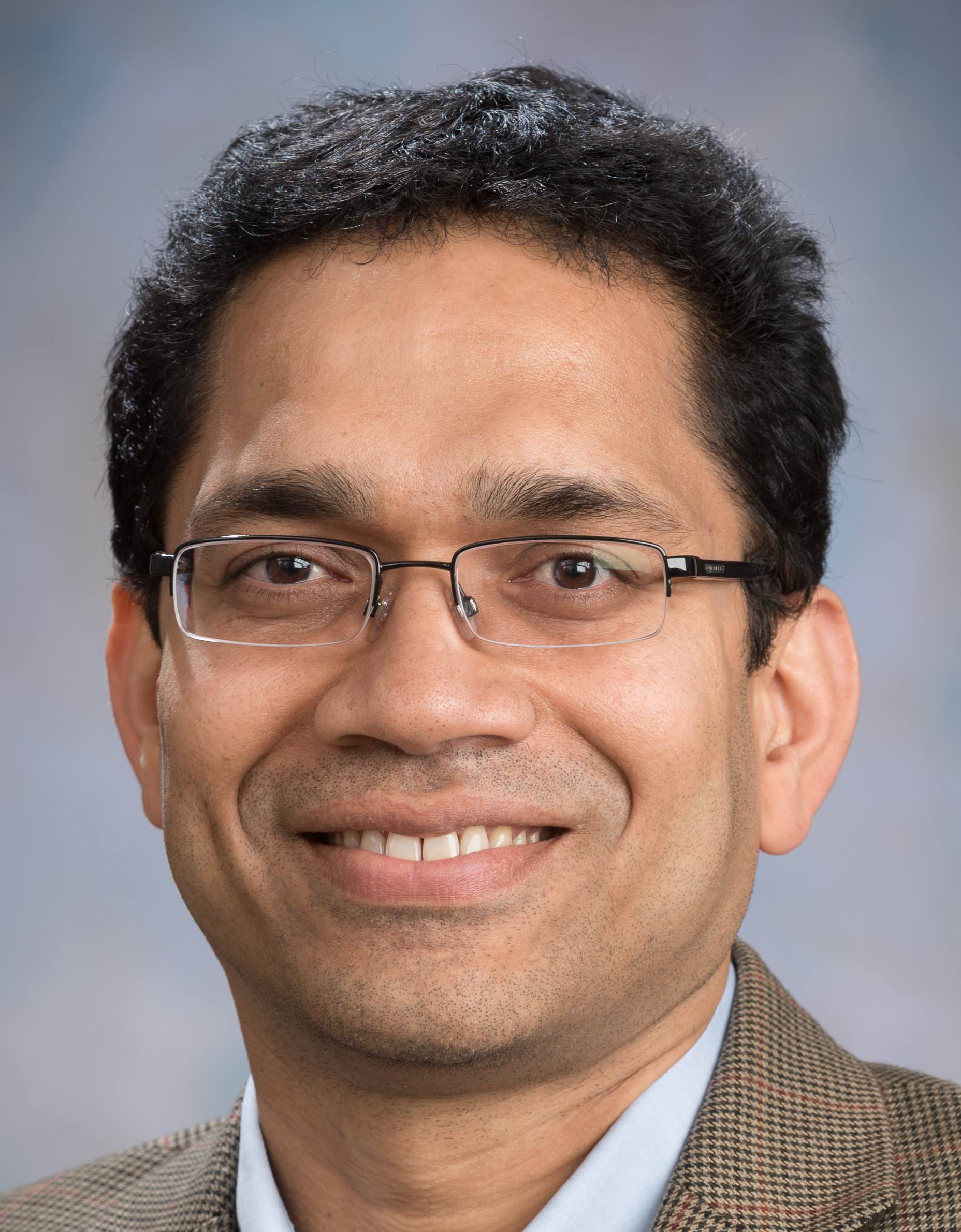
Computer Science Department Colloquium A Retrospective on Scientific Presentations Speaker: Shrideep Pallickara, Professor of Computer Science, Colorado State University When: 11:00AM ~ 11:50AM, Monday October 20, 2025 Abstract: I am not sure what came first. The aspiration to be a good presenter or the realization that I was not a particularly good one. No matter. That aspiration-realization gap soon widened into a chasm as I got busy filling it with a long list of all the things I seemed to be getting wrong. More important than the errors though was the growing awareness of what the great presenters were getting right. Their rhythms, their ease, their uncanny ability to make a room lean forward while I was still fumbling my way through the slides. I began going to talks … many outside computer science. I discovered that clarity and connection transcend disciplinary boundaries. The best speakers whether they were tracing an evolutionary tree or unpacking a metaphor, shared a deep respect for their audience’s attention. This talk is my attempt at a retrospective distillation of what they knew instinctively and I had to learn the hard way. Bio: Shrideep Pallickara is a Professor of Computer Science at Colorado State University where he also directs the Center for eXascale Spatial Data Analytics and Computing (XSD). His research explores the design of large-scale computing systems for big data, distributed analytics, and GeoAI helping to shape the ways in which we can illuminate the dynamics of complex systems. He has published over 165 peer-reviewed articles. His research has been supported by major funding agencies in both the United States and the United Kingdom, including the National Science Foundation’s flagship programs in scientific innovation, computing systems, and artificial intelligence; the Department of Homeland Security; the National Institute of Food and Agriculture; the U.K. EPSRC’s e-Science program; and the National Endowment for the Humanities. His research and assorted systems software have been deployed in domains such as epidemiology, precision agriculture, urban resilience, earthquake science, environmental and ecological monitoring, and high-energy physics. He is a recipient of the Board of Governor’s award, the NSF CAREER award, and a Monfort Professorship. |
|
|
|
Computer Science Department Colloquium Introduction to Graduate Research in Computer Science -- Part 2 Speaker: Sudipto Ghosh, Professor and Graduate Program Director of Computer Science When: 11:00AM ~ 11:50AM, Monday October 27, 2025 Abstract: Bio: Dr. Sudipto Ghosh is a Professor of Computer Science at Colorado State University with an affiliate appointment in Systems Engineering. He is also the Graduate Program Director of the Computer Science Department. He received the Ph.D. degree in Computer Science from Purdue University in 2000. His research interests are in software engineering (design and testing) and computer science education. He is on the editorial boards of Software and Systems Modeling, Software Quality Journal, and Information and Software Technology. Previously he was on the editorial boards of the IEEE Transactions on Reliability and Journal of Software Testing and Reliability. He was a general co-chair of MODELS 2009 (Denver) and Modularity 2015 (Fort Collins). He was a program co-chair of ICST 2010 (Paris), DSA 2017 (Beijing), ISSRE 2018 (Memphis), ISEC 2024 (Bangalore), and QRS 2024 (Cambridge). He has served on program committees of multiple conferences. He is a member of the ACM and a Senior Member of the IEEE. |
|
|

|
ISTeC Distinguished Lecture Shoppability in Advertising - Technology and Innovation Speaker: Professor Michelle R. Nelson, Department of Advertising and Institute of Communications Research, University of Illinois, Urbana Champaign When: 3:00PM ~ 4:00PM, Monday October 27, 2025 Abstract: Shop Now! Buy Now! Shoppable ads collapse traditional marketing funnels (i.e., awareness-interest-consideration-intent-evaluation-purchase) by enabling purchases directly through the platform. But how do people feel about this new kind of ad? Does the medium or the ad format matter? In this interactive session, we’ll explore shoppable ads across media, including “product placements you can buy.” Results of initial studies show the “unexpectedness” and effectiveness of these ads. Discussion will focus on the ethics, effects, and efficacy of technology, personalization, and advertising. Bio: Michelle Nelson (Ph.D. Communications and Media, University of Illinois) is a Professor in the Department of Advertising and Institute of Communications Research at the University of Illinois, Urbana Champaign. Her research and public engagement activities focus on persuasion and persuasion knowledge, with a focus on advertising ⁄ media literacy. She regularly teaches courses on advertising & society, digital advertising, promotional campaigns, and qualitative methods. Nelson has professional experience in advertising and in the game industry, which shapes her interest in technology and the evolving media landscape. https: ⁄ ⁄ scholar.google.com ⁄ citations?user=hlMe-2cAAAAJ&hl=en&oi=ao; https: ⁄ ⁄ www.linkedin.com ⁄ in ⁄ michelle-nelson-5492aa6 ⁄ |
|
|
|
Sponsored by ISTeC in conjunction with the Department of Journalism and Media Communication, Department of Computer Science and Department of Electrical and Computer Engineering Seminar Series Persuasion Knowledge Model - A Moving Target Speaker: Professor Michelle R. Nelson, Department of Advertising and Institute of Communications Research, University of Illinois, Urbana Champaign When: 2:00PM ~ 3:00PM, Tuesday October 28, 2025 Abstract: The Persuasion Knowledge Model (PKM) is a theoretical framework that examines how targets (people) acquire knowledge about persuasion agents’ goals and tactics and then develop coping strategies to deal with persuasion attempts (Friestad & Wright, 1994). The PKM has had a profound impact across persuasion contexts and academic fields. Yet, as the media landscape evolves, there is a need to re-examine the role players in the model and expand our ideas about coping strategies. In this interactive session, we’ll examine Nelson’s past research with children ⁄ adolescents and look at new research that explores consumer search processes and transparency apps. Finally, we’ll discuss the role of theory evolution and application for persuasion knowledge, practice, and public policy. Bio: Michelle Nelson (Ph.D. Communications and Media, University of Illinois) is a Professor in the Department of Advertising and Institute of Communications Research at the University of Illinois, Urbana Champaign. Her research and public engagement activities focus on persuasion and persuasion knowledge, with a focus on advertising ⁄ media literacy. She regularly teaches courses on advertising & society, digital advertising, promotional campaigns, and qualitative methods. Nelson has professional experience in advertising and in the game industry, which shapes her interest in technology and the evolving media landscape. https: ⁄ ⁄ scholar.google.com ⁄ citations?user=hlMe-2cAAAAJ&hl=en&oi=ao; https: ⁄ ⁄ www.linkedin.com ⁄ in ⁄ michelle-nelson-5492aa6 ⁄ |
|
|

|
Computer Science Department Colloquium Energy, Bosons, and Computational Complexity Speaker: Saeed Mehraban, Assistant Professor, Department of Computer Science, Tufts University When: 11:00AM ~ 11:50AM, Monday November 3, 2025 Abstract: The standard model of quantum computation is based on discrete variables, and usually computational complexity is measured using resources such as number of qubits, circuit depth or size. Many degrees of freedom such as bosons are continuous and correspond to infinite dimensional Hilbert spaces. In this talk I will explain challenges in defining a model of quantum computation over such degrees of freedom. I will explain that other than the standard parameter, we should consider energy, i.e., average particle number as a fundamental resource in continuous variable quantum computations. For example, we show certain gate sets allow poly-time bosonic computations to simulate PTOWER, the set of deterministic computations whose runtime scales as a tower of exponentials with polynomial height. Even just exponential energy and O(1) modes suffice to simulate NP, which, importantly, is a setup similar to that of the recent bosonic factoring algorithm of [Brenner, Caha, Coiteux-Roy and Koenig (2024)]. I will furthermore explain upper bound results. Bosonic computations with polynomial energy can be simulated in BQP, “physical” bosonic computations with arbitrary finite energy are decidable, and the gate set consisting of Gaussian gates and the cubic phase gate can be simulated in PP, with exponential bound on energy, improving upon the previous PSPACE upper bound. Finally, combining upper and lower bounds yields no-go theorems for a continuous-variable Solovay–Kitaev theorem for gate sets such as the Gaussian and cubic phase gates. Based on Joint work with Chabaud, Gharibian, Motamedi, Naeij, Rudolph and Sambavisan Bio: Saeed Mehraban is an assistant professor of computer science at Tufts University. Prior to this position he was an IQIM postdoctoral scholar at the California Institute of Technology. During spring 2020, he was a research fellow for the Quantum Wave in Computing Program at the Simons Institute for the Theory of Computing. His research interests include quantum computation and information, and their connections with computer science and physics. His recent research work concern delineating the boundary between classical and quantum computing in noisy intermediate-scale quantum devices. He obtained his Ph.D. in Electrical Engineering and Computer Science from MIT, where he was advised by Scott Aaronson and Aram Harrow. He completed BSc degrees in Electrical Engineering and Physics from Sharif University of Technology, Iran. |
|
|
|
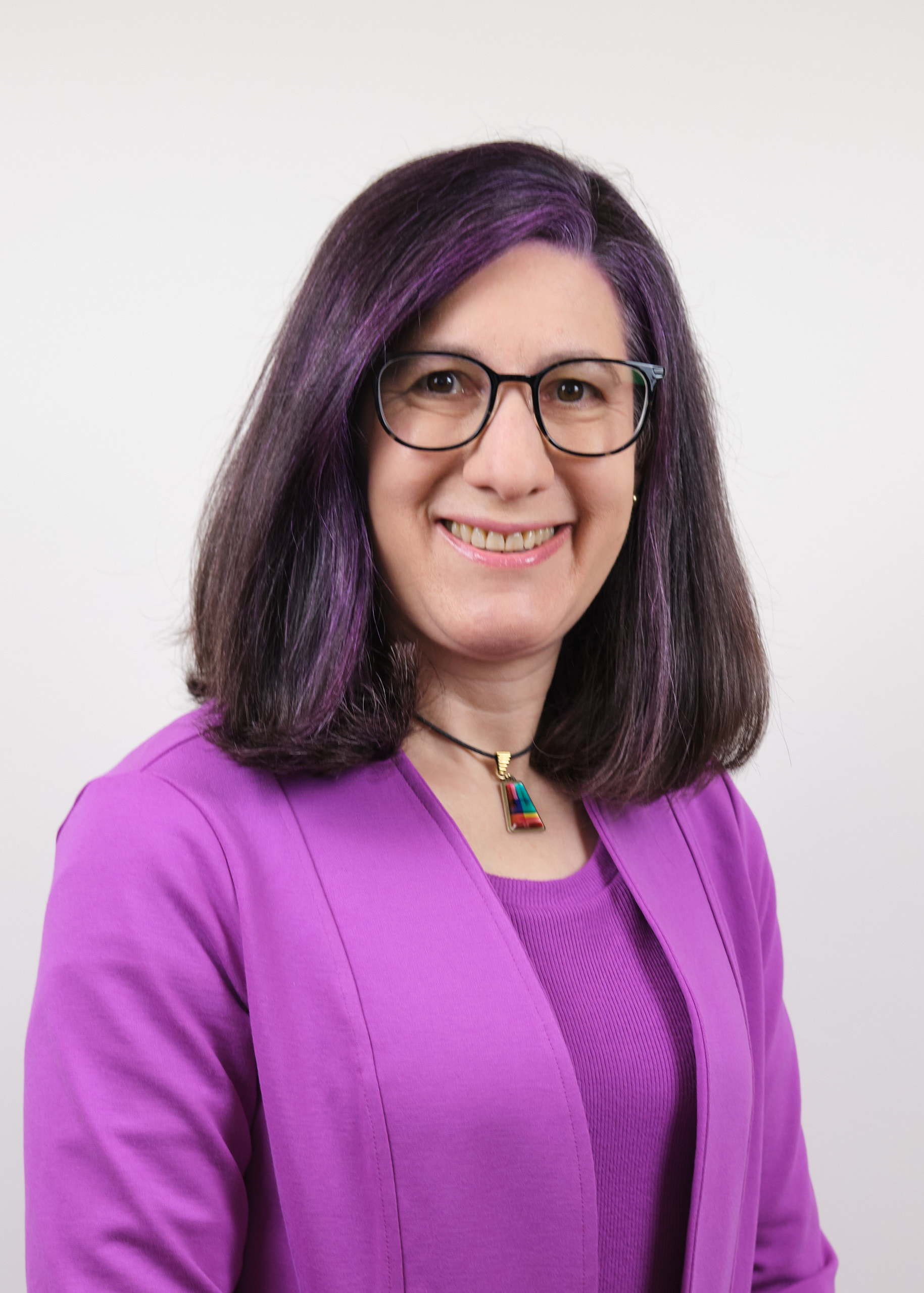
ISTeC Distinguished Lecture Series From Password Requirements to IoT Cybersecurity Labels: Informing Policy Makers and the Public with Research, Art, and Fashion Speaker: Lorrie Faith Cranor, Director and Bosch Distinguished Professor, CyLab Security and Privacy Institute, Carnegie Mellon University When: 11:00AM ~ 11:50AM, Monday November 10, 2025 Abstract: An increasing number of security and privacy researchers are conducting research with the intention of informing public policy discussions. I will talk about how I got interested in public policy and discuss a wide range of research projects I've worked on over the past 30 years that had some impact on public policy discussions including research on the usability of privacy tools, the cost of reading privacy policies, various types of privacy labels, password policy, and the California privacy choice icon. I will also discuss some of my creative uses of art and fashion to inform the public about privacy and security concepts. Bio: Lorrie Faith Cranor is the Director and Bosch Distinguished Professor in Security and Privacy Technologies of CyLab and the FORE Systems University Professor of Computer Science and of Engineering and Public Policy at Carnegie Mellon University. She directs the CyLab Usable Privacy and Security Laboratory (CUPS) and co-directs the Privacy Engineering masters program. In 2016 she served as Chief Technologist at the US Federal Trade Commission. She is also a co-founder of Wombat Security, a security awareness training company that was acquired by Proofpoint. She founded the Symposium On Usable Privacy and Security (SOUPS) and co-founded the Conference on Privacy Engineering Practice and Respect (PEPR). She serves on the Center for Democracy and Technology (CDT) Board of Directors, the Aspen Institute Cybersecurity Group, the Future of Privacy Forum (FPF) advisory board, and the Electronic Privacy Information Center (EPIC) advisory board. In 2003 she was honored as one of the top 100 innovators 35 or younger by Technology Review magazine. More recently she was elected to the ACM CHI Academy and named a fellow of ACM, IEEE, and AAAS. She has also received the ACM CHI Social Impact Award, the International Association of Privacy Professionals Privacy Leadership Award, and (with colleagues) the IEEE Cybersecurity Award for Practice. She was previously a researcher at AT&T-Labs Research. She holds a doctorate in Engineering and Policy from Washington University in St. Louis. She plays soccer, walks to work, sews her own clothing with pockets, and tries not to embarrass her three young adult children. |
|
|
|
ISTeC in conjunction with the Department of Computer Science and Department of Electrical and Computer Engineering Seminar Series Measuring the impact of privacy indicators in online search results: a behind-the-scenes account from a series of experimental studies Speaker: Lorrie Faith Cranor, Director and Bosch Distinguished Professor, CyLab Security and Privacy Institute, Carnegie Mellon University When: 2:00PM ~ 3:15PM, Tuesday November 11, 2025 Abstract: Many e-commerce websites post privacy policies to address Internet shoppers’ privacy concerns. However, few users read or understand them. Iconic privacy indicators in search engines or on websites may make privacy policies more accessible and easier for users to understand. In a series of research studies, we first examined whether privacy indicators impact users’ browsing and purchasing decisions for both everyday and privacy-sensitive items, and later also examined whether the placement and timing of indicators makes a difference. We faced a number of challenges conducting ecologically valid, ethical, controlled experimental studies and we didn’t get it completely right the first time. In this talk I’ll give a behind-the-scenes account of how we conducted these studies and how we addressed the challenges we faced along the way. Bio: Lorrie Faith Cranor is the Director and Bosch Distinguished Professor in Security and Privacy Technologies of CyLab and the FORE Systems University Professor of Computer Science and of Engineering and Public Policy at Carnegie Mellon University. She directs the CyLab Usable Privacy and Security Laboratory (CUPS) and co-directs the Privacy Engineering masters program. In 2016 she served as Chief Technologist at the US Federal Trade Commission. She is also a co-founder of Wombat Security, a security awareness training company that was acquired by Proofpoint. She founded the Symposium On Usable Privacy and Security (SOUPS) and co-founded the Conference on Privacy Engineering Practice and Respect (PEPR). She serves on the Center for Democracy and Technology (CDT) Board of Directors, the Aspen Institute Cybersecurity Group, the Future of Privacy Forum (FPF) advisory board, and the Electronic Privacy Information Center (EPIC) advisory board. In 2003 she was honored as one of the top 100 innovators 35 or younger by Technology Review magazine. More recently she was elected to the ACM CHI Academy and named a fellow of ACM, IEEE, and AAAS. She has also received the ACM CHI Social Impact Award, the International Association of Privacy Professionals Privacy Leadership Award, and (with colleagues) the IEEE Cybersecurity Award for Practice. She was previously a researcher at AT&T-Labs Research. She holds a doctorate in Engineering and Policy from Washington University in St. Louis. She plays soccer, walks to work, sews her own clothing with pockets, and tries not to embarrass her three young adult children. |
|
|
|
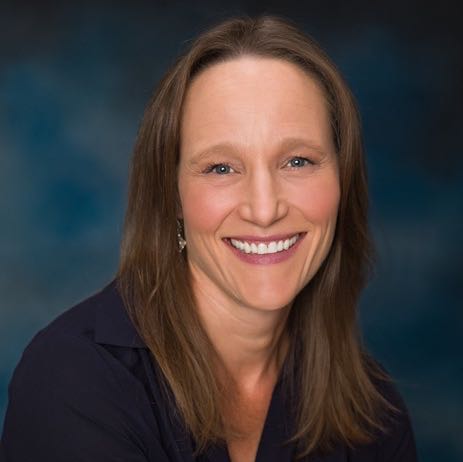
Computer Science Department Colloquium GenAI and Ethical use in Writing Speaker: Kristina Quynn, Founding Director of CSU Writes When: 11:00AM ~ 11:50AM, Monday November 17, 2025 Abstract: As generative AI (GenAI) tools rapidly transform research writing, computer scientists must develop responsible, transparent, and field-aligned practices for using them. This session will provide an overview of current GenAI guidance from universities, major funding agencies (e.g. NSF, NIH), professional organizations (e.g. ACM, IEEE), and scholarly publishers, highlighting where expectations align, and where they diverge. We will explore examples of acceptable and unacceptable GenAI use in research writing, including coding documentation, literature reviews, and manuscript preparation. A key goal of this talk is for students to take away AI-use strategies that support research integrity, reproducibility, and authorship accountability. As a practical outcome, participants will design a personalized GenAI Compass as part of a decision-making framework for determining when, why, and how to use GenAI ethically in their own writing and collaborations. Bio: Kristina Quynn, Ph.D., is the founding director of CSU Writes, a university-wide initiative that advances sustainable writing practices and research productivity for graduate students, postdoctoral scholars, and faculty. Trained as a literary scholar, her research has focused on experimental fiction and criticism. Her recent publications and projects focus on faculty–graduate student co-authorship, mentoring through writing, and career-span writing support. She co-chairs the international Consortium on Graduate Communication and collaborates widely to strengthen graduate education and research development. Recently, she created a short-course on AI and research ethics for biomedical researchers at CSU. |
|
|

|
Computer Science Department Colloquium Bias Mitigation in Informal Professor Evaluation Systems Speaker: Nash Mahmoud, Associate Professor of Computer Science and Engineering at LSU, CEO and co-founder of Professor Index When: 12:00PM ~ 12:50PM, Wednesday November 19, 2025 Abstract: Informal professor evaluation systems are used by college students to evaluate instructors and inform course selection decisions. However, the anonymity afforded by these systems often allows preconceived notions and offline biases, such as sexism, racism, and ageism, to surface online. These biases frequently appear as malicious textual reviews and unfair ratings of teaching quality. Well-documented evidence shows that unmitigated bias in informal professor evaluation systems can contribute to negative classroom dynamics, hinder student learning outcomes, and erode faculty self-efficacy. Biased evaluations can also disproportionately impact junior and tenure-track faculty, as informal ratings could influence hiring, promotion, and tenure decisions. In this talk, I will present our cross-disciplinary research initiative aimed at understanding and mitigating bias in student reviews. Drawing from cognitive psychology, human-computer interaction, and software engineering, I will discuss how students’ cognitive biases shape their online review behavior. In addition, I will introduce evidence-based design strategies implemented in our platform Professor Index to detect, counteract, and mitigate bias and misinformation in informal professor evaluation systems. Bio: Dr. Nash Mahmoud is an Associate Professor of Computer Science and Engineering at Louisiana State University (LSU), where he directs the Software Engineering and Evolution Lab (SEEL). At SEEL, he and his team of graduate and undergraduate students work on several federally funded projects in empirical software engineering, with emphasis on requirements engineering, code analysis, and human-computer interaction. His research has been supported by the National Science Foundation (NSF), the National Security Agency (NSA), Google, and the Louisiana Board of Regents. He is also the Co-founder and CEO of Professor Index, an evidence-based platform for public professor evaluation that leverages data-driven strategies and responsible design principles to provide a trustworthy, bias-mitigated, and accountable alternative to existing evaluation systems. |
|
|
|
Computer Science Department Colloquium Thanksgiving Break Speaker: No Seminar When: 11:00AM ~ 11:50AM, Monday November 24, 2025 Abstract: |
|
|
|
Computer Science Department Colloquium Wave Equations, Tunneling between optima, and Max-kSAT Optimization Speaker: L. Darrell Whitley, Professor of Computer Science When: 11:00AM ~ 11:50AM, Monday December 1, 2025 Abstract: Elementary Landscapes, first described by Lov Grover, provides a wave equation for computing summary statistics of local search neighborhoods for several NP-Hard problems. These results can be extended to MAX-kSAT and all k-bounded Boolean functions. Using Fourier decomposition, it is simple to compute efficient gradients for all k-bounded Boolean functions. Conditions also exist that make it possible to directly “tunnel” between local optima without quantum methods; this can be done in O(1) time in the best case for MAX-kSAT. Fourier periodicity can provide a different gradient path for k-bounded Boolean optimization for both quantum and conventional optimization methods. Bio: Prof. Darrell Whitley has published more than 250 papers, which have garnered more than 34,000 citations. He is a Fellow of the ACM recognized for his contributions to Evolutionary Computation, and he was awarded the IEEE PIONEER Award in Evolutionary Computation in 2022. |
|
|
|
Computer Science Department Colloquium Lightning talks by CS793 students Speaker: CS793 students When: 11:00AM ~ 1:00PM, Monday December 8, 2025 Abstract: Four minute talks by each student in groups of three, followed by Q&A for that group. 11:00-11:15 Dennis Kim Elmaddin Azizli Maryangela White 11:15-11:30 Dakota Kenoyer-Healy Asif Uz Zaman Tanmay Prabhu 11:30-11:45 Emilie Beck Everett Lewark Nathan Orwick 11:45-12:00 Eric Redman Khondaker Masfiq Reza Chandan Bhangale 12:00-12:15 Jason Curcio Shadaab Kawnain Bashir Philip Hopkins 12:15-12:30 Chirag Kandoi Collin Conrad Abhimanyu Chawla 12:30-12:45 Evan Anspach Rye Easton |