
| |
|
|
The Department of Computer Science
of Colorado State University, in cooperation with ISTeC
(Information Science and Technology Center), offers the CS
Colloquium series as a service to all who are interested
in computer science. When in-person meetings are possible, most seminars are scheduled for
Monday 11:00AM -- 11:50AM in CSB 130. For help finding the locations of our seminar
meetings, consult the on-line CSU campus map. |
Upcoming Events
CS Colloquium Schedule, Spring 2026
|
|
Computer Science Department Colloquium Introduction to the Graduate Program Speaker: Sudipto Ghosh, Professor and Graduate Director, Computer Science Department When: 11:00AM ~ 11:50AM, Monday January 26, 2026  Abstract: Dr. Ghosh introduces the Computer Science graduate program at CSU. Bio: Dr. Sudipto Ghosh is a Professor of Computer Science at Colorado State University with an affiliate appointment in Systems Engineering. He is also the Graduate Program Director of the Computer Science Department. He received the Ph.D. degree in Computer Science from Purdue University in 2000. His research interests are in software engineering (design and testing) and computer science education. He is on the editorial boards of Software and Systems Modeling, Software Quality Journal, and Information and Software Technology. Previously he was on the editorial boards of the IEEE Transactions on Reliability and Journal of Software Testing and Reliability. He was a general co-chair of MODELS 2009 (Denver) and Modularity 2015 (Fort Collins). He was a program co-chair of ICST 2010 (Paris), DSA 2017 (Beijing), ISSRE 2018 (Memphis), ISEC 2024 (Bangalore), and QRS 2024 (Cambridge). He has served on program committees of multiple conferences. He is a member of the ACM and a Senior Member of the IEEE. |
|
|
|
Computer Science Department Colloquium How to Succeed in the CS Graduate Program Speaker: Sudipto Ghosh, Professor and Graduate Director, Computer Science Department When: 11:00AM ~ 11:50AM, Monday February 2, 2026 Abstract: Continuation of the lecture from Jan 26. Bio: Dr. Sudipto Ghosh is a Professor of Computer Science at Colorado State University with an affiliate appointment in Systems Engineering. He is also the Graduate Program Director of the Computer Science Department. He received the Ph.D. degree in Computer Science from Purdue University in 2000. His research interests are in software engineering (design and testing) and computer science education. He is on the editorial boards of Software and Systems Modeling, Software Quality Journal, and Information and Software Technology. Previously he was on the editorial boards of the IEEE Transactions on Reliability and Journal of Software Testing and Reliability. He was a general co-chair of MODELS 2009 (Denver) and Modularity 2015 (Fort Collins). He was a program co-chair of ICST 2010 (Paris), DSA 2017 (Beijing), ISSRE 2018 (Memphis), ISEC 2024 (Bangalore), and QRS 2024 (Cambridge). He has served on program committees of multiple conferences. He is a member of the ACM and a Senior Member of the IEEE. |
|
|

|
Computer Science Department Colloquium The art of the 21st Century: Multimodal Interaction for Virtual Reality Sketching and Sculpting Speaker: Francisco R. Ortega, Associate Professor of Computer Science, Colorado State University When: 11:00AM ~ 11:50AM, Monday February 9, 2026 Abstract: In recent years, Virtual Reality (VR) systems have emerged as a novel medium for artists to express their ideas within an immersive 3D Virtual Environment (VE). For instance, artists benefit from the ample virtual space. At the same time, they can magnify a specific area within the VE to make precise adjustments, giving artists the flexibility to build an artwork. Artists also benefit from using novel input devices that provide feedback, enabling them to create enhanced works. These input devices can mimic or improve the tools artists use. A third advantage is that artists can correct errors, which can be challenging or impossible when creating objects with physical materials. Moreover, in the immersive virtual space, artists can focus on their craft by reducing external distractions. Due to these advantages, artists have chosen VR as a medium to express themselves. For example, Gio Nakpil creates intricate 3D sculptures in VR, demonstrating the transformative potential of VR in art. Another example is Collin Leix, who seamlessly integrates classical oil-painting techniques with contemporary VR technology. These artistic VR tools are not here to replace existing mediums but to create opportunities for new ways to communicate art. However, there are still persistent usability challenges, in particular for emerging VR sculpting. For example, existing interaction techniques often fail to capture the materiality of sculpting by requiring unnatural hand use. This talk will present current challenges for multimodal interaction in VR art, the authors' and colleagues' qualitative findings, and a way forward to motivate researchers to help us improve interaction quality, allowing artists to concentrate on their craft rather than the technology. We will also describe our VR Sketch and Sculpt application design for research experiments. Bio: Francisco R. Ortega is an Associate Professor at Colorado State University (CSU) and has been Director of the Natural User Interaction Lab (NUILAB) since Fall 2018. Dr. Ortega earned his Ph.D. in Computer Science (CS) with a focus on Human-Computer Interaction (HCI) and 3D User Interfaces (3DUI) from Florida International University (FIU). He also held the Postdoctoral and visiting assistant professor positions at FIU between February 2015 and July 2018. His research has focused on (1) multimodal and unimodal interaction (gesture-centric), which includes gesture elicitation (e.g., a form of participatory design), (2) information access effort in augmented reality (e.g., visual cues and automation bias), (3) AR notifications, and (4) stress reduction using virtual reality forest bathing. For multimodal interaction research, Dr. Ortega focuses on enhancing user interaction through (a) multimodal elicitation, (b) developing interactive techniques, and (c) refining augmented reality visualization techniques. The primary domains for interaction include general environments, immersive analytics, and VR sketching. His research has resulted in over 90 peer-reviewed publications, including books, journals, conferences, workshops, and magazine articles, in venues such as ACM CHI, ACM VRST, IEEE VR, IEEE TVCG, IEEE ISMAR, ACM PACMHCI, ACM ISS, ACM SUI, IEEE 3DUI, HFES, and Human Factor Journals, among others. Dr. Ortega has experience with multiple government-funded projects. For example, Dr. Ortega served as a co-Principal Investigator for the DARPA Communicating with Computers project. He is a principal investigator (PI) for a 3-year effort funded by ONR, titled "Perceptual ⁄ Cognitive Aspects of Augmented Reality: Experimental Research and a Computational Model." He was recently awarded a new ONR grant titled “Assessing Cognitive Load and Managing Extraneous Load to Optimize Training.” The National Science Foundation and other agencies and companies have also funded him. This includes the NSF CAREER 2023 for microgestures and multimodal interaction. Since his tenure-track appointment at CSU in August 2018, Dr. Ortega has brought over 5 million dollars in external funding (with 4.2 million as principal investigator). His lab website is https: ⁄ ⁄ nuilab.org |
|
|

|
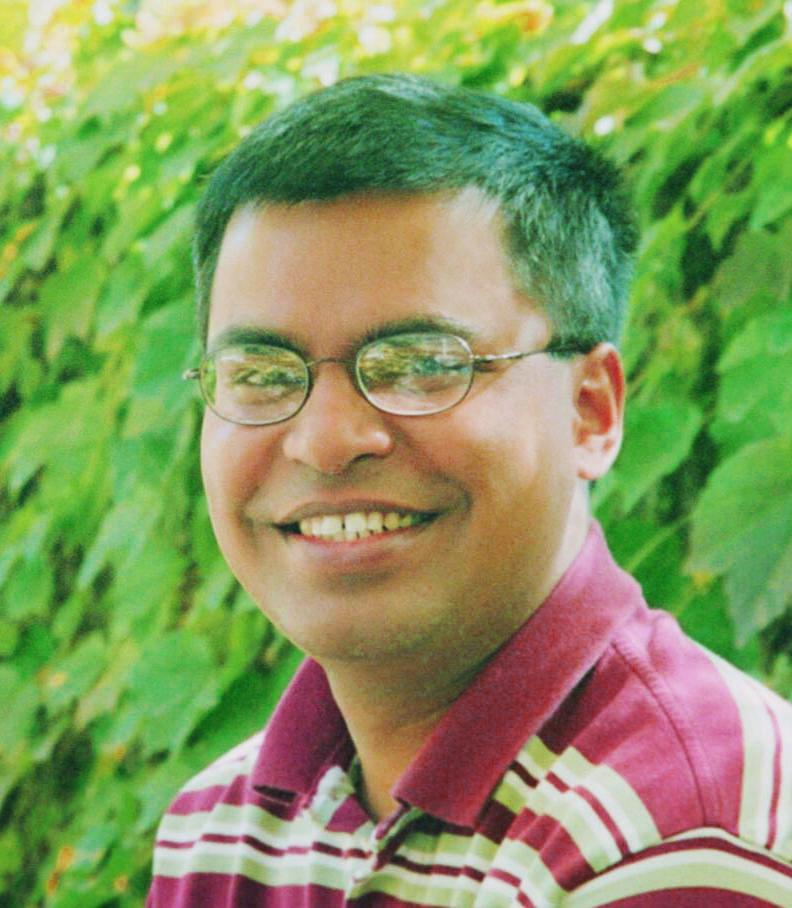
Computer Science Department Colloquium Validation and Uncertainty Quantification for Spatial Data Speaker: David Burt, Post-doctoral Associate, MIT When: 11:00AM ~ 11:50AM, Monday February 16, 2026 Abstract: Spatial prediction is central to weather forecasting, quantifying air pollution impacts, and many other scientific problems. But to draw credible conclusions, we need validation methods that tell us when predictions from statistical or physical models can be trusted. Classical validation often breaks down when the locations used for validation systematically differ from the fixed target locations where we ultimately want to predict. This mismatch is often not an instance of covariate shift (as commonly formalized) because the validation and target locations are fixed (e.g., on a grid or at select points) rather than independent and identically distributed draws from two distributions. We formalize a check on validation methods: that they become arbitrarily accurate as validation data become arbitrarily dense. We show that widely used classical, covariate-shift, and spatial approaches can fail this check. We then introduce a reweighting method that builds on existing ideas in the covariate-shift literature, but adapts them to the validation data at hand. We prove that our proposed method passes our check, and we demonstrate its advantages empirically on simulated and real data. I conclude with a discussion of my broader research agenda: developing methods for validation and uncertainty quantification with spatiotemporal data, aimed at making machine learning reliable in environmental health applications. Bio: David Burt is a postdoctoral associate in the Laboratory for Information and Decision Systems at MIT. Previously, he received a PhD from the Machine Learning Group within the Department of Engineering at the University of Cambridge. He develops tools to evaluate prediction methods and to quantify uncertainty when data has spatial or spatiotemporal structure. |
|
|

|
Computer Science Department Colloquium Understanding the Online Information Experience Speaker: Pranav Goel, Postdoctoral Research Associate, Northeastern University’s Network Science Institute When: 11:00AM ~ 11:50AM, Monday February 23, 2026 Abstract: Individuals increasingly spend a significant portion of their lives online, and the Internet serves as a primary medium for obtaining and disseminating information. A complex network of people, content, information sources, technologies, and platforms (online structures) shapes how information is created, shared, and consumed on the Internet. Yet, due to a variety of reasons such as lack of feasible operationalization or appropriate data, studies of online information often neglect the social nature of information as well as the cross-platform experiences that define the modern Internet, resulting in a limited, platform- and content-specific understanding of online information, removed from its social context. In addition, any understanding of the online information experience today needs to reckon with the impact of generative AI, and this impact also needs to be understood in the context of different information-seeking behaviours facilitated by different kinds of platforms. In this talk, I will address these limitations by first discussing how mainstream news articles get used to support misleading narratives on social media, using network science and natural language processing methods. Next, I will discuss ongoing research work that increases our understanding of the impact of generative AI on information-seeking behavior, especially in terms of web referrals. I will then briefly discuss ongoing and future research work tracking differences and consistencies in information consumption experiences for the same end-users across different online platforms. This talk aims to broaden the scope of our understanding of the online information ecosystem, while also highlighting ways that such a goal can help ground development of new LLM-based methods and new evaluational frameworks for computational models. Bio: Dr. Pranav Goel is a Postdoctoral Research Associate at Northeastern University’s Network Science Institute. He earned his PhD in Computer Science at the University of Maryland in 2023. His research interests broadly span natural language processing and computational social science, and he specializes in using web and text data as a potent digital trace of societal dynamics to empirically investigate interdisciplinary research questions. He is currently interested in investigating the impact of generative AI on online information-seeking behavior, building a cross-platform understanding of online information consumption including generative AI as a component of the broader information ecosystem, and the sociopolitical phenomena of framing and narratives in news and social media. His work has been published in major computer science conferences such as NeurIPS, EMNLP, and ICWSM, as well as interdisciplinary journals with a broad audience, such as Nature Human Behaviour and Nature Scientific Data. |
|
|
|
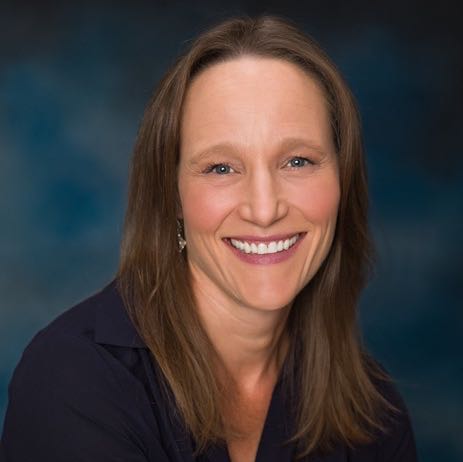
Computer Science Department Colloquium Research as Iteration: A Short Talk about Writing Sustainably and Processing Feedback Effectively Speaker: Kristina Quynn, Founding Director of CSU Writes When: 11:00AM ~ 11:50AM, Monday March 2, 2026 Abstract: Researchers in Computer Science are trained to manage research projects and to think iteratively about algorithms and systems. It helps to approach writing tasks and advisor feedback with a similar mindset. This talk addresses two areas where many graduate students and faculty struggle with their research writing: 1) building a realistic, sustainable writing plan for multiple writing projects and document types [exams, conference papers, collaborative lab projects, theses ⁄ dissertations]; and 2) learning how to give, receive, process, and incorporate feedback on writing productively. This talk will draw on parallels to version control, code review, and iterative design to talk about writing as an ongoing research practice and explore feedback as a model-refinement process. We will consider agile planning and process models that emerged from the work of computer scientists (Jeff Sutherland’s Scrum and Cal Newport’s Deep Work) and that have been effective to streamline the writing of academics (Rebecca Pope-Ruark’s Agile Faculty). We will also draw on evidence-based feedback advice that includes guidance from studies of faculty and graduate student co-authors conducted at CSU. Bio: Kristina Quynn, Ph.D., is the founding director of CSU Writes, a university-wide initiative that advances sustainable writing practices and research productivity for graduate students, postdoctoral scholars, and faculty. Trained as a literary scholar, her research has focused on experimental fiction and criticism. Her recent publications and projects focus on faculty–graduate student co-authorship, mentoring through writing, and career-span writing support. She co-chairs the international Consortium on Graduate Communication and collaborates widely to strengthen graduate education and research development. Recently, she created a short course on AI and research ethics for biomedical researchers at CSU. |
|
|

|
Computer Science Department Colloquium Student Presentations of Award-winning Papers at Conferences Speaker: Abdul Matin, Tanjim Bin Faruk, Brian Tan, PhD students in Computer Science When: 11:00AM ~ 11:50AM, Monday March 9, 2026 Abstract: Paper 1: A. Matin, T. Bin Faruk, S. Pallickara and S. L. Pallickara, "HyperKD: Distilling Cross-Spectral Knowledge in Masked Autoencoders via Inverse Domain Shift with Spatial-Aware Masking and Specialized Loss," 2025 IEEE 12th International Conference on Data Science and Advanced Analytics (DSAA), Birmingham, United Kingdom, 2025, pp. 1-11. https: ⁄ ⁄ ieeexplore.ieee.org ⁄ abstract ⁄ document ⁄ 11248016. Best Paper Award at DSAA 2025. The proliferation of foundation models, pretrained on large-scale unlabeled datasets, has emerged as an effective approach in creating adaptable and reusable architectures that can be leveraged for various downstream tasks using satellite observations. However, their direct application to hyperspectral remote sensing remains challenging due to inherent spectral disparities and the scarcity of available observations. In this work, we present HyperKD, a novel knowledge distillation framework that enables transferring learned representations from a teacher model into a student model for effective development of a foundation model on hyperspectral images. Unlike typical knowledge distillation frameworks, which use a complex teacher to guide a simpler student, HyperKD enables an inverse form of knowledge transfer across different types of spectral data, guided by a simpler teacher model. Building upon a Masked Autoencoder (MAE) with a Vision Transformer (ViT) backbone, HyperKD distills knowledge from Prithvi (a ViT-based MAE geospatial foundation model trained on lower-dimensional multispectral data) into a student tailored for EnMAP hyperspectral imagery. HyperKD addresses the inverse domain adaptation problem with spectral gaps by introducing a feature-based strategy that includes spectral range-based channel alignment, spatial featureguided masking, and an enhanced loss function tailored for hyperspectral images. HyperKD bridges the substantial spectral domain gap, enabling the effective use of pretrained foundation models for geospatial applications. Extensive experiments show that HyperKD significantly improves representation learning in MAEs, leading to enhanced reconstruction fidelity and more robust performance on downstream tasks such as land cover classification, crop type identification, and soil organic carbon prediction, underpinning the potential of knowledge distillation frameworks in remote sensing analytics with hyperspectral imagery. Paper 2: Brian Tan, Ewan S. D. Davies, Indrakshi Ray, and Mahmoud A. Abdelgawad. 2025. Safety Analysis in the NGAC Model. In Proceedings of the 30th ACM Symposium on Access Control Models and Technologies (SACMAT '25). Association for Computing Machinery, New York, NY, USA, 91–98. https: ⁄ ⁄ doi.org ⁄ 10.1145 ⁄ 3734436.3734444. Best Paper Runner-Up Award at SACMAT 2025. We study the safety problem for the next-generation access control (NGAC) model. We show that under mild assumptions it is coNP-complete, and under further realistic assumptions we give an algorithm for the safety problem that significantly outperforms naive brute force search. We also show that real-world examples of mutually exclusive attributes lead to nearly worst-case behavior of our algorithm. |
|
|

|
Computer Science Department Colloquium Speaker: Spring Break When: 11:00AM ~ 11:50AM, Monday March 16, 2026 Abstract: |
|
|
|
Computer Science Department Colloquium How to Succeed in the CS Graduate Program Speaker: Sudipto Ghosh, Professor and Graduate Director, Computer Science Department When: 11:00AM ~ 11:50AM, Monday March 23, 2026 Abstract: Continuation of the lecture from Feb 2. Bio: Dr. Sudipto Ghosh is a Professor of Computer Science at Colorado State University with an affiliate appointment in Systems Engineering. He is also the Graduate Program Director of the Computer Science Department. He received the Ph.D. degree in Computer Science from Purdue University in 2000. His research interests are in software engineering (design and testing) and computer science education. He is on the editorial boards of Software and Systems Modeling, Software Quality Journal, and Information and Software Technology. Previously he was on the editorial boards of the IEEE Transactions on Reliability and Journal of Software Testing and Reliability. He was a general co-chair of MODELS 2009 (Denver) and Modularity 2015 (Fort Collins). He was a program co-chair of ICST 2010 (Paris), DSA 2017 (Beijing), ISSRE 2018 (Memphis), ISEC 2024 (Bangalore), and QRS 2024 (Cambridge). He has served on program committees of multiple conferences. He is a member of the ACM and a Senior Member of the IEEE. |
|
|
|
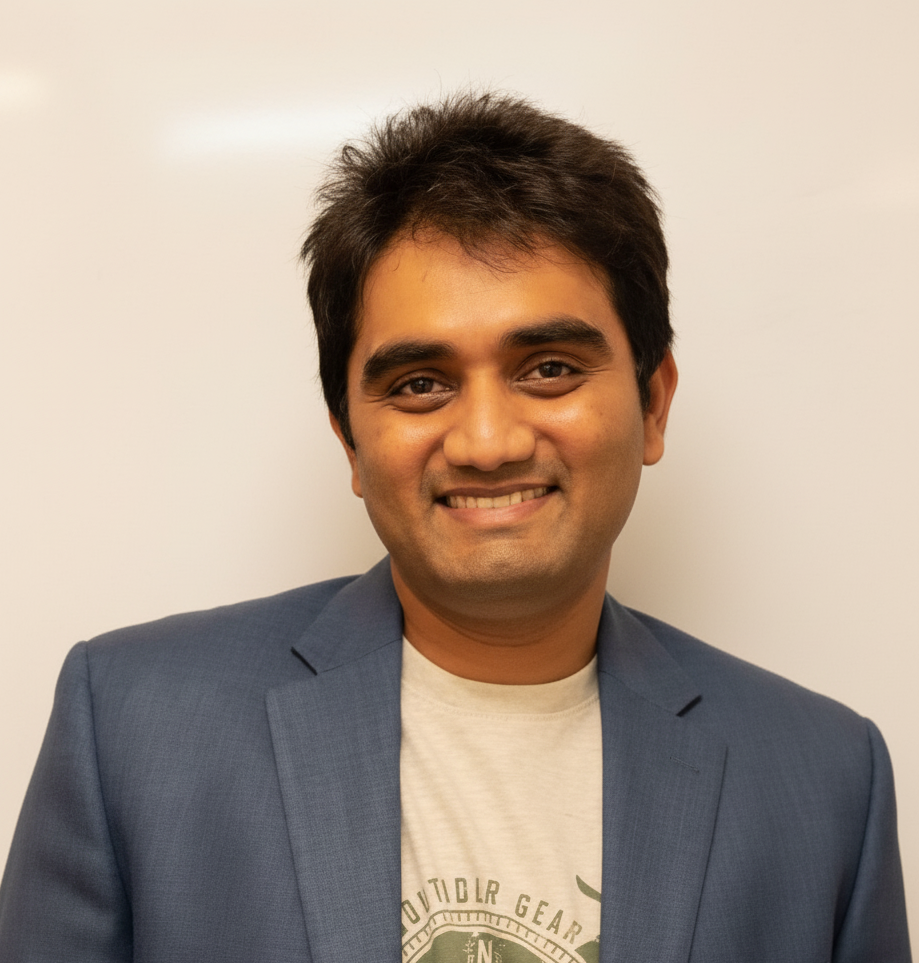
Computer Science Department Colloquium Convergence is Half Way to Consensus Speaker: Gowtham Kaki, Assistant Professor, Univesity of Colorado, Boulder When: 11:00AM ~ 11:50AM, Monday March 30, 2026 Abstract: Replicated State Machine (RSM) is a foundational abstraction of a distributed system known for its guarantee of strong consistency: every execution steps through a linear sequence of states no matter where the operations are submitted. In practice, distributed systems are characterized by non-determinism induced by system-level faults, such as network partitions. Overcoming non-determinism and ensuring a functional degree of fault-tolerance requires correctly implementing consensus algorithms, such as Raft and Paxos, which are known to be notoriously difficult to reason about. Ensuring the correctness of consensus protocol implementations currently requires heroic program verification efforts, which is infeasible in practice. In this talk, I argue that the complexity of verification is primarily due the low-level programming model in which consensus and strong replication are implemented asynchronous message passing which thwarts decidable automation by exposing the details of asynchronous communication. To solve this problem, I propose implementing RSM abstraction as a wrapper on top of a Weakly-Consistent Replicated State Machine that guarantees a weaker property called Convergence. Weak RSMs are available (in the sense of CAP theorem) under network partitions and can therefore serve as suitable foundations for performant distributed systems. Crucially, they abstract asynchronous communication and allow us to derive local-scope verification conditions (as opposed to global-scope inductive invariants) for consensus safety. I describe a verification framework we built, called Ravencheck, that leverages this approach to enable SMT-aided verification of consensus protocol implementations. I describe our experience of using Ravencheck to automatically verify Ferry -- a strongly-consistent log replication system based on a novel adaptation of the Raft consensus algorithm. Bio: Gowtham Kaki is an Assistant Professor of Computer Science at the University of Colorado Boulder. His research interests include Formal Methods, Programming Languages, Program Analysis, and Verification. He primarily publishes at ACM SIGPLAN conferences, such as PLDI, POPL, OOPSLA, and ICFP. His prior work contributed program analysis and verification techniques for diverse application domains, including distributed systems, cryptographic communication protocols, mobile applications, and functional programs. He was a recipient of Google PhD Fellowship and an Amazon Faculty Research Award. |
|
|

|
Computer Science Department Colloquium Overview of Human Factors Research in the Federal Aviation Administration Civil Aerospace Medical Institute and Recent Head-Worn Display Research Speaker: David Newton, Engineering Research Psychologist, Federal Aviation Administration Civil Aerospace Medical Institute, Aerospace Human Factors Research Division When: 11:00AM ~ 11:50AM, Monday April 6, 2026 Abstract: Dr. Newton will provide an overview of human factors research and development in the FAA Civil Aerospace Medical Institute, including the capabilities and expertise within each of the division’s human factors labs, lab technologies, and how the Human Factors Research Division supports the FAA’s internal research and development process. Dr. Newton will round out the presentation by sharing his recent research investigating the human performance and aviation safety implications of implementing a head-worn display in the flight deck of transport aircraft to conduct critical approach and landing flight operations. Bio: Dr. David Newton is an Engineering Research Psychologist in the Aerospace Human Factors Research Division of the Federal Aviation Administration’s Civil Aerospace Medical Institute. Since joining the FAA six-and-a-half years ago, he has been leading a line of research on flight deck human factors issues such as pilot performance, workload, and crew coordination during the use of Synthetic and Enhanced Vision Systems and head-worn displays, as well as novel flight deck automation such as automatic takeoff and landing in general aviation aircraft and automatic takeoff in transport aircraft. His research supports the development of Aircraft Certification and Flight Standards policy, guidance, and safety decision-making for emerging systems and operations across the National Airspace System. Dr. Newton also provides technical leadership through mentoring, interdisciplinary coordination, and service on industry standards committees, including RTCA and SAE International. He holds a Ph.D. and M.A. in Human Factors ⁄ Experimental Psychology from Texas Tech University and a B.A. in Psychology from Westminster College. |
|
|

|
ISTeC Distinguished Lecture From Targets to Implementation: Aligning Decarbonization Policy with Grid Operations Speaker: Dr. C. Lindsay Anderson, Professor & Chair, Department of Biological and Environmental Engineering, Cornell University, Senior Fellow, Cornell Atkinson Center for Sustainability, House Professor and Dean, William Keeton House When: 11:00AM ~ 11:50AM, Monday April 13, 2026 Abstract: Decarbonization policies are essential for driving the clean energy transition, but they don’t always align with the operational realities of power systems. In this talk, I will examine the risks that arise when policies and operations diverge, and share ideas on how updating these policies could lead to more reliable, resilient, and effective energy systems. The goal is to show how attention to operational details can strengthen—not undermine—our path toward a sustainable future. Bio: Dr. Catherine (Lindsay) Anderson is Professor and Chair of the Department of Biological and Environmental Engineering at Cornell University. Her research focuses on energy system decarbonization, situated at the interface of environmental and systems engineering, electric power systems, applied optimization, and decision science. She is a Senior Member of the Institute of Electrical and Electronics Engineers (IEEE) and a Senior Fellow of the Cornell Atkinson Center for Sustainability. Lindsay previously served as the interim Director of the Cornell Energy Systems Institute, and as the Kathy Dwyer Marble and Curt Marble Faculty Director for Energy with the Cornell Atkinson Center for Sustainability. Dr. Anderson’s work has been recognized with several awards, including the Energy Systems Integration Group Award of Excellence for Contributions to Energy Systems Optimization in 2021, the Cornell College of Engineering Award for Research Excellence in 2016, and the National Science Foundation CAREER Award in 2015. Beyond her scholarship, she is engaged in shaping clean energy legislation in New York State. She serves on the environmental advisory committee for the New York Independent System Operator, the electric grid operator for the state, where she brings a researchinformed perspective to policy and planning. Dr. Anderson has also played a leading role in building scholarly communities. She co-leads the Electric Energy Systems track at the Hawaii International Conference on System Sciences, serving as co-chair since 2019. She was selected as an Ivy+ Provost Leadership Fellow in the inaugural cohort through the Faculty Advancement Network. Dr. Anderson received a B.Sc. (Engineering) and an M.S. in Environmental Engineering from the University of Guelph in Canada, and a Ph.D. in Applied Mathematics from the University of Western Ontario in Canada. |
|
|
|
Sponsored by Colorado State University’s Information Science and Technology Center (ISTeC) In conjunction with the Energy Institute, Department of Computer Science and Department of Electrical and Computer Engineering Seminar Series Spectral Clustering to Enable Distributed Control in Low-Inertia Power Grids Speaker: ISTeC DL (C Lindsay Anderson) When: 4:00PM ~ 5:00PM, Monday April 13, 2026 Abstract: The rapid growth of distributed energy resources will soon create more control points than can be coordinated through centralized optimization on operational time scales. This motivates the development of distributed control strategies that can manage disturbances locally while preserving overall system stability. A key step in designing such algorithms is identifying network partitions that are well-suited to decentralized control. In this talk, I will present an approach based on spectral clustering applied to structure-preserving dynamic graph representations of the power system. This method reveals sub-graphs that can effectively contain and mitigate disturbances, offering a scalable pathway toward distributed control in future grids. Bio: Dr. Catherine (Lindsay) Anderson is Professor and Chair of the Department of Biological and Environmental Engineering at Cornell University. Her research focuses on energy system decarbonization, situated at the interface of environmental and systems engineering, electric power systems, applied optimization, and decision science. She is a Senior Member of the Institute of Electrical and Electronics Engineers (IEEE) and a Senior Fellow of the Cornell Atkinson Center for Sustainability. Lindsay previously served as the interim Director of the Cornell Energy Systems Institute, and as the Kathy Dwyer Marble and Curt Marble Faculty Director for Energy with the Cornell Atkinson Center for Sustainability. Dr. Anderson’s work has been recognized with several awards, including the Energy Systems Integration Group Award of Excellence for Contributions to Energy Systems Optimization in 2021, the Cornell College of Engineering Award for Research Excellence in 2016, and the National Science Foundation CAREER Award in 2015. Beyond her scholarship, she is engaged in shaping clean energy legislation in New York State. She serves on the environmental advisory committee for the New York Independent System Operator, the electric grid operator for the state, where she brings a researchinformed perspective to policy and planning. Dr. Anderson has also played a leading role in building scholarly communities. She co-leads the Electric Energy Systems track at the Hawaii International Conference on System Sciences, serving as co-chair since 2019. She was selected as an Ivy+ Provost Leadership Fellow in the inaugural cohort through the Faculty Advancement Network. Dr. Anderson received a B.Sc. (Engineering) and an M.S. in Environmental Engineering from the University of Guelph in Canada, and a Ph.D. in Applied Mathematics from the University of Western Ontario in Canada. |
|
|
|
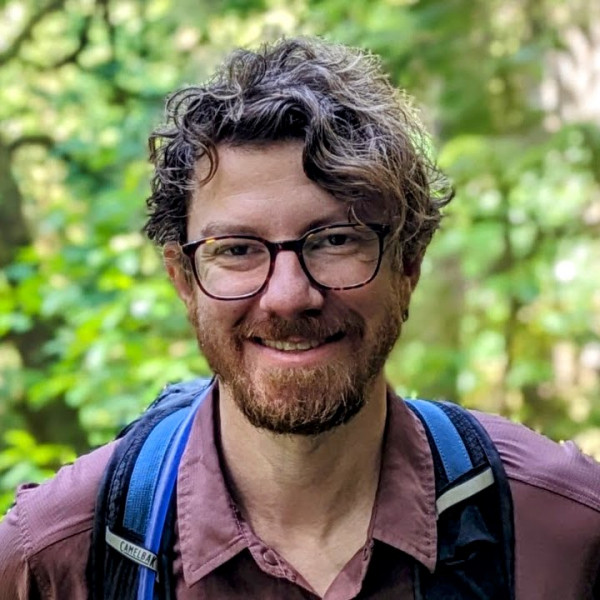
Computer Science Department Colloquium What Does it Mean for A.I. to be Explainable? Speaker: Collin Rice, Associate Professor, Department of Philosophy, 2025 Monfort Professor, Colorado State University When: 11:00AM ~ 11:50AM, Monday April 20, 2026 Abstract: A central question in the growing literature surrounding A.I. asks whether, when, and how A.I is explainable.Yet it is typically unclear what is meant by explanation in these discussions and so no determinate answers seem to be available. As a philosopher of science who works on the nature of explanation and idealization, I here apply three lessons from the literature on scientific explanation to argue for three surprising results concerning the explainability of A.I. systems. First, explanatory scientific models often cannot be decomposed into their different explanatory components. Thus, A.I. systems can also be explained while failing to be decomposable. Second, many scientific explanations are provided by tracking general statistical patterns that are autonomous of the underlying causes. Thus, A.I. outputs can sometimes be explained by tracking statistical patterns of dependence even if we are unable to discover similar causes underlying those patterns. And, third, most explanations in science are provided by exploring counterfactual situations or what-if-things-had-been-different questions. As a result, whether A.I. is explainable is less about grasping how the system being modeled actually is and more about A.I.’s ability to track these relationships of counterfactual dependence across possible systems. I conclude with some questions about the relationship between explainability and trust. Bio: Collin Rice is a philosopher of science and the 2025 Monfort Professor for his work on interdisciplinary collaboration and democratic science communication. He also works on the nature of scientific explanation, understanding, and knowledge and how they are achieved through the use of idealization and modeling. |
|
|

|
Computer Science Department Colloquium Physically-Grounded Upskilling Speaker: Jason Corso, Toyota Professor of AI, University of Michigan When: 11:00AM ~ 11:50AM, Monday April 27, 2026 Abstract: "Hey Siri, Can you measure the left ventricular ejection fraction of this patient?" Capturing the global zeitgeist, Artificial Intelligence (AI) still falls short of its promise in many fields. AI's ability to interactively guide and upskill a human in physical tasks is a particularly weak facet of the state of the art. Yet, humans are naturally adept at guiding their peers through physical tasks. This talk focuses on bridging this important gap in physically grounded AI. After defining the problem of physically grounded upskilling, I will explore three key areas. First, I will address modeling human ambiguity through our "Hazy Oracles" work. Second, I will discuss modeling mistakes in physically-grounded upskilling. Finally, I will present our state-of-the-art system for upskilling medical practitioners. Bio: Corso is the Toyota Professor of AI with appointments in Robotics, Electrical Engineering and Computer Science at the University of Michigan and Co-Founder ⁄ CSO of the AI startup Voxel51. He received his PhD and MSE degrees at The Johns Hopkins University in 2005 and 2002, respectively, and the BS Degree with honors from Loyola College In Maryland in 2000, all in Computer Science. He is the recipient of a U Michigan EECS Outstanding Achievement Award 2018, Google Faculty Research Award 2015, the Army Research Office Young Investigator Award 2010, National Science Foundation CAREER award 2009, SUNY Buffalo Young Investigator Award 2011, a member of the 2009 DARPA Computer Science Study Group, and a recipient of the Link Foundation Fellowship in Advanced Simulation and Training 2003. Corso has authored more than 150 peer-reviewed papers and hundreds of thousands of lines of open-source code on topics of his interest including computer vision, robotics, data science, and general computing. He is a member of the AAAI, ACM, MAA and a senior member of the IEEE. |
|
|

|
ISTeC Distinguished Lecture Machining the Ghost: Ideating in the Age of AI Speaker: Dr. Daniel Rockmore, William H. Neukom 1964 Distinguished Professor of Computational Science, Director of the Neukom Institute for Computational Science, Professor of Math, Dartmouth College When: 11:00AM ~ 11:50AM, Wednesday April 29, 2026 Abstract: Generative AI --- systems that write, draw, code, search, and increasingly act on our behalf --- is changing not only how we work, but how we think. For some, these tools are accelerants for imagination and discovery; for others, they threaten to flatten originality, weaken judgment, and outsource the hard labor from which ideas emerge. In this talk, I place today’s excitement and anxiety in a longer history of cognitive tools, from writing itself to calculators, search engines, and earlier “thinking machines.” Along the way, we will ask what creativity really is, what part language plays in thought, and why dialogue, whether with another person, with oneself, or now with a machine, can be so powerful in the making of ideas. What happens to human creativity, education, and intellectual life when the machine becomes a collaborator, a critic, a ghostwriter, and sometimes a very plausible imitation of our own inner voice. Bio: Dan Rockmore is the William H. Neukom 1964 Distinguished Professor of Computational Science, Director of the Neukom Institute for Computational Science, and Associate Dean for the Sciences at Dartmouth College. He holds appointments in two academic departments — math and computer science — and is deeply committed to interdisciplinary study. Rockmore His most recent book is the edited volume What are the Arts and Sciences? A Guide for the Curious (UPNE 2018). He is also co-editor of the book Law as Data, published in 2019 through SFI Press. In addition to his scientific work he is the co-producer of four documentary films, most recently The Birth of BASIC on the origins of the BASIC programming language. His current research interests include the geometry of high-dimensional data and the use of large language models and deep learning to give a mathematical understanding of literature and writing. |
|
|
|
ponsored by Colorado State University’s Information Science and Technology Center (ISTeC) In conjunction with the ........, Department of Computer Science and Department of Electrical and Computer Engineering Seminar Series On the Algebra of Moving Window Calculations Speaker: Dr. Daniel Rockmore, William H. Neukom 1964 Distinguished Professor of Computational Science, Director of the Neukom Institute for Computational Science, Professor of Math, Dartmouth College When: 11:00AM ~ 11:50AM, Thursday April 30, 2026 Abstract: Moving window calculations arise throughout applied mathematics, computer science, and engineering. Familiar examples include moving sums, maxima, and filters, but the same basic problem also appears in more general windowed recurrences. In this talk, we show that a large class of such calculations admits a common algebraic formulation. In the associative setting, moving window calculations can be recast as exponentiation in a semidirect product, bringing efficient powering algorithms to bear. In more general settings, semi-associativity provides the right framework for representing compositions of updates and understanding when efficient computation is still possible. This point of view not only unifies a broad family of examples, but also leads naturally to compact vectorized implementations, making the methods well suited to modern GPU architectures. This is joint work with David Maslen. Bio: Dan Rockmore is the William H. Neukom 1964 Distinguished Professor of Computational Science, Director of the Neukom Institute for Computational Science, and Associate Dean for the Sciences at Dartmouth College. He holds appointments in two academic departments — math and computer science — and is deeply committed to interdisciplinary study. Rockmore His most recent book is the edited volume What are the Arts and Sciences? A Guide for the Curious (UPNE 2018). He is also co-editor of the book Law as Data, published in 2019 through SFI Press. In addition to his scientific work he is the co-producer of four documentary films, most recently The Birth of BASIC on the origins of the BASIC programming language. His current research interests include the geometry of high-dimensional data and the use of large language models and deep learning to give a mathematical understanding of literature and writing. |
|
|
|
Computer Science Department Colloquium Speaker: Saira Jabeen, PhD student, Department of Computer Science, Colorado State University When: 11:00AM ~ 11:50AM, Monday May 4, 2026 Abstract: |
