Research
This page contains brief descriptions of active research projects, some with links to pages with more details. Smaller or less active research projects appear as blog posts.
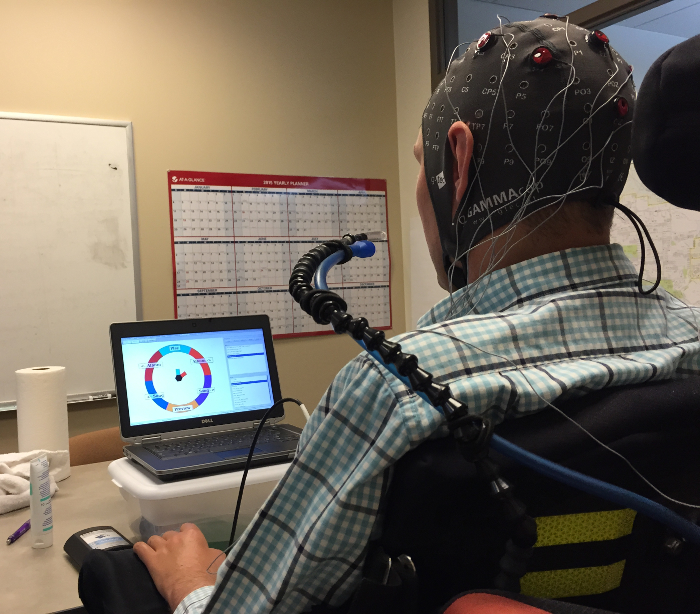 Brain-Computer Interfaces at CSU (1994-):
Brain-computer interfaces (BCIs) are hardware and software systems
that sample electroencephalogram (EEG) signals from electrodes placed
on the scalp and extract patterns from EEG that indicate the mental
activity being performed by the person. The long-term goal of this
line of research is a new mode of communication for victims of
diseases and injuries resulting in the loss of voluntary muscle
control, such as amyotrophic lateral sclerosis (ALS), high-level
spinal cord injuries or severe cerebral palsy. The autonomic and
intellectual functions of such subjects continue to be active. This
can result in a locked-in syndrome in which a person is unable to
communicate to the outside world. The interpretation of information
contained in EEG may lead to a new mode of communication with which
subjects can communicate with their care givers or directly control
devices such as televisions, wheel chairs, speech synthesizers and
computers.
Brain-Computer Interfaces at CSU (1994-):
Brain-computer interfaces (BCIs) are hardware and software systems
that sample electroencephalogram (EEG) signals from electrodes placed
on the scalp and extract patterns from EEG that indicate the mental
activity being performed by the person. The long-term goal of this
line of research is a new mode of communication for victims of
diseases and injuries resulting in the loss of voluntary muscle
control, such as amyotrophic lateral sclerosis (ALS), high-level
spinal cord injuries or severe cerebral palsy. The autonomic and
intellectual functions of such subjects continue to be active. This
can result in a locked-in syndrome in which a person is unable to
communicate to the outside world. The interpretation of information
contained in EEG may lead to a new mode of communication with which
subjects can communicate with their care givers or directly control
devices such as televisions, wheel chairs, speech synthesizers and
computers.
The main objectives of this project are to develop open-source software for on-line EEG analysis and brain-computer interfaces; compare signal quality and BCI performance of various EEG systems in users' homes; develop new algorithms for identifying cognitive components in spontaneous EEG related to mental tasks as a basis for new BCI protocols; improve BCI reliability by allowing users to adapt through real-time feedback and by adapting the BCI algorithms using error-related EEG components; and experiment with interaction of two people using BCIs. Results are evaluated by the accuracy of EEG classification, the speed with which the classification can be performed, and the expense of the EEG system and of its maintenance and extendibility.
 During July through December, 2016, I was on sabbatical leave, working with Walter
Besio of the University
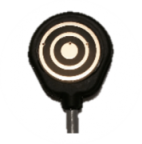
of Rhode Island and CREMedical. Dr. Besio has developed a new EEG electrode consisting of three
concentric rings. Signals from the three rings are combined in a
pre-amplifier to produce spatially localized EEG recordings.
He has shown that his tripolar electrodes, tEEG, reveal high
frequency components that precede epileptic seizures. In a current
collaboration, we are investigating benefits and limitations of tEEG
electrodes used in brain-computer interfaces. Preliminary results show
that P300 waves are more reliably detected with tEEG electrodes than
with conventional electrodes.
During July through December, 2016, I was on sabbatical leave, working with Walter
Besio of the University
of Rhode Island and CREMedical. Dr. Besio has developed a new EEG electrode consisting of three
concentric rings. Signals from the three rings are combined in a
pre-amplifier to produce spatially localized EEG recordings.
He has shown that his tripolar electrodes, tEEG, reveal high
frequency components that precede epileptic seizures. In a current
collaboration, we are investigating benefits and limitations of tEEG
electrodes used in brain-computer interfaces. Preliminary results show
that P300 waves are more reliably detected with tEEG electrodes than
with conventional electrodes.
This project is supported by the National Science Foundation through awards 1065513, 0934499, 0542947, 0434351, 0208958, 9202100, and the Science Foundation of Ireland through an E.T.S Walton Award, 2007.
 Faster Reinforcement Learning After Pretraining or with Simultaneous Supervised Learning of Deep Networks (2015-):
Reinforcement learning problems are ones for which correct actions
must be learned by experience. Performance feedback is provided by an
evaluative feedback, or reinforcement, that is based on the behavior
of a system being controlled by the actions. Correct actions are not
known before hand. Reinforcement learning algorithms have a reputation
of being slow, partly because it can take a lot of interactions before
performance is optimized. Another reason they are thought to be slow
is that two kinds of problems must be solved: good actions must be
discovered, and these actions must be associated with the state of the
system. It is this second problem that supervised learning algorithms
deal with. Deep neural networks are continuing to surpass
state-of-the-art supervised algorithms in many domains. In this
project, we are investigating the use of deep neural networks in a
reinforcement learning framework. Deepmind, and others, have had
considerable success with this approach. However, adding the long
training times required for deep nets to the large number of
interactions required for reinforcement learning problems can be
problematic. We are investigating novel ways of pretraining the hidden
layers of neural networks to learn representations that are useful in
predicting next state from current state and action. Such information
is available before any goal-oriented reinforcement values are
introduced. We have found that for the pole-balancing
problem a large reduction in reinforcement learning time resulting
from pretraining deep Q-networks in this way. For more information, see 2015 paper
Faster Reinforcement Learning After Pretraining or with Simultaneous Supervised Learning of Deep Networks (2015-):
Reinforcement learning problems are ones for which correct actions
must be learned by experience. Performance feedback is provided by an
evaluative feedback, or reinforcement, that is based on the behavior
of a system being controlled by the actions. Correct actions are not
known before hand. Reinforcement learning algorithms have a reputation
of being slow, partly because it can take a lot of interactions before
performance is optimized. Another reason they are thought to be slow
is that two kinds of problems must be solved: good actions must be
discovered, and these actions must be associated with the state of the
system. It is this second problem that supervised learning algorithms
deal with. Deep neural networks are continuing to surpass
state-of-the-art supervised algorithms in many domains. In this
project, we are investigating the use of deep neural networks in a
reinforcement learning framework. Deepmind, and others, have had
considerable success with this approach. However, adding the long
training times required for deep nets to the large number of
interactions required for reinforcement learning problems can be
problematic. We are investigating novel ways of pretraining the hidden
layers of neural networks to learn representations that are useful in
predicting next state from current state and action. Such information
is available before any goal-oriented reinforcement values are
introduced. We have found that for the pole-balancing
problem a large reduction in reinforcement learning time resulting
from pretraining deep Q-networks in this way. For more information, see 2015 paper ![[PDF]](images/pdf.png) and others on the Publications page. Also available is a video of a 2016 talk at Brown University.
and others on the Publications page. Also available is a video of a 2016 talk at Brown University.
This work has been supported by the National Science Foundation through awards 0245291, 9804747, 9401249, and 9212191.
 Climate Informatics (2015-):
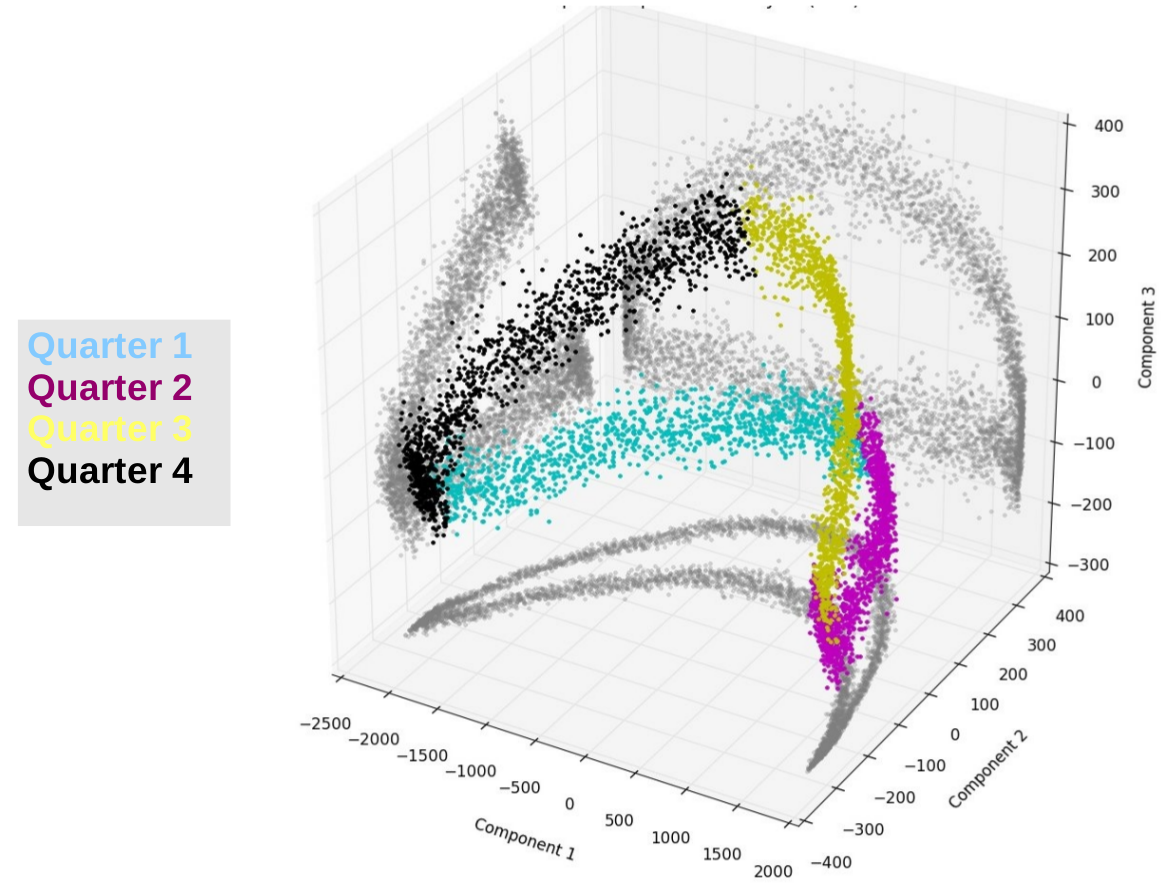
Atmospheric data sets often
consist of multiple time series with unknown, complex
interrelationships. In this project we seek to explore what
kind of interrelationships can be discovered in climate data
by applying the framework of artificial neural networks.
As a first application we look at establishing relationships
between top of atmosphere radiative flux and air/surface
temperatures. This is an important application, since a
thorough understanding of those relationships is essential
for understanding the effect of CO2-induced warming on
the Earth’s energy balance and future climate. We describe
the basic idea, first observations and plans for future work. For more information, See our 2015 paper and poster .
Climate Informatics (2015-):
Atmospheric data sets often
consist of multiple time series with unknown, complex
interrelationships. In this project we seek to explore what
kind of interrelationships can be discovered in climate data
by applying the framework of artificial neural networks.
As a first application we look at establishing relationships
between top of atmosphere radiative flux and air/surface
temperatures. This is an important application, since a
thorough understanding of those relationships is essential
for understanding the effect of CO2-induced warming on
the Earth’s energy balance and future climate. We describe
the basic idea, first observations and plans for future work. For more information, See our 2015 paper and poster .
 Protein Aggregation Propensity (2013-):
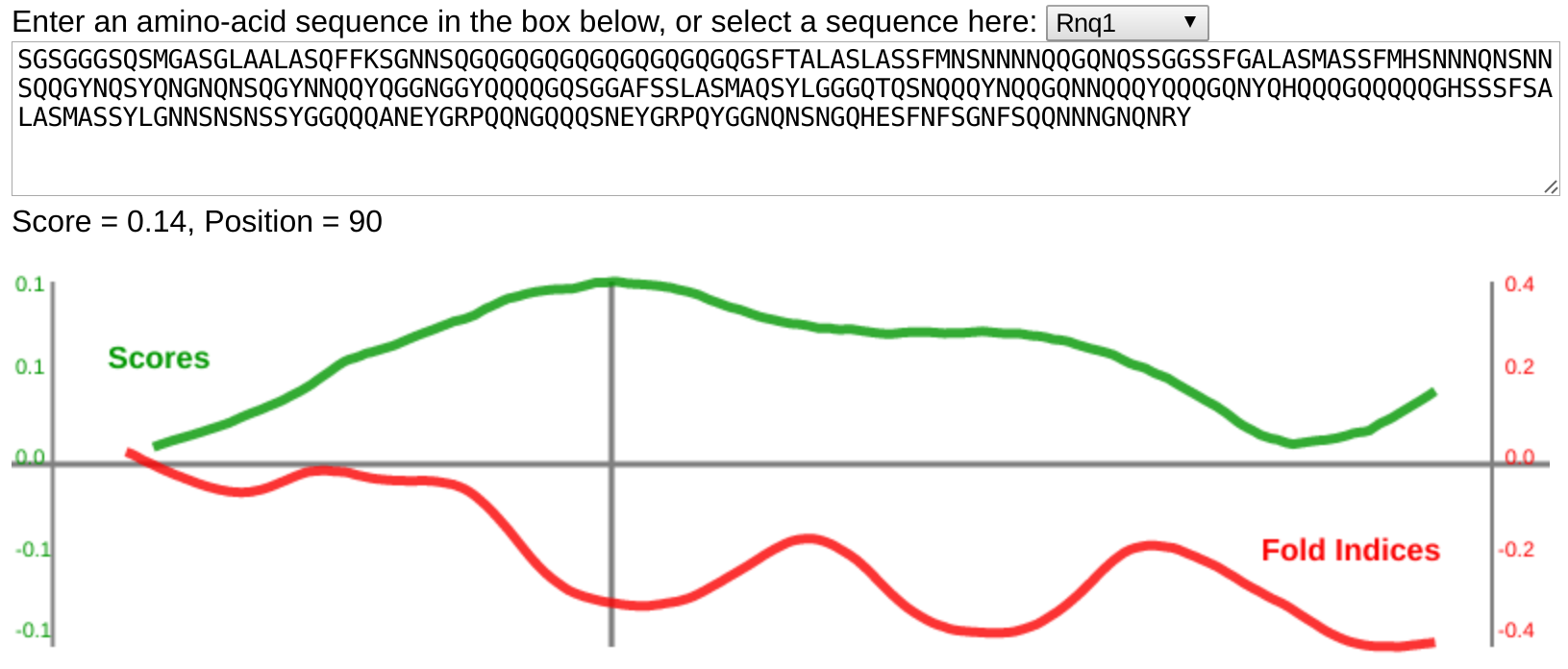
Numerous proteins contain domains that are enriched in glutamine and
asparagine residues, and aggregation of some of these proteins has
been linked to both prion formation in yeast and a number of human
diseases. Unfortunately, predicting whether a given
glutamine/asparagine-rich protein will aggregate has proven
difficult. Here we describe a recently developed algorithm designed to
predict the aggregation propensity of glutamine/asparagine-rich
proteins. We discuss the basis for the algorithm, its limitations, and
usage of recently developed online (javascript implementation) and downloadable versions of the
algorithm.
Protein Aggregation Propensity (2013-):
Numerous proteins contain domains that are enriched in glutamine and
asparagine residues, and aggregation of some of these proteins has
been linked to both prion formation in yeast and a number of human
diseases. Unfortunately, predicting whether a given
glutamine/asparagine-rich protein will aggregate has proven
difficult. Here we describe a recently developed algorithm designed to
predict the aggregation propensity of glutamine/asparagine-rich
proteins. We discuss the basis for the algorithm, its limitations, and
usage of recently developed online (javascript implementation) and downloadable versions of the
algorithm.